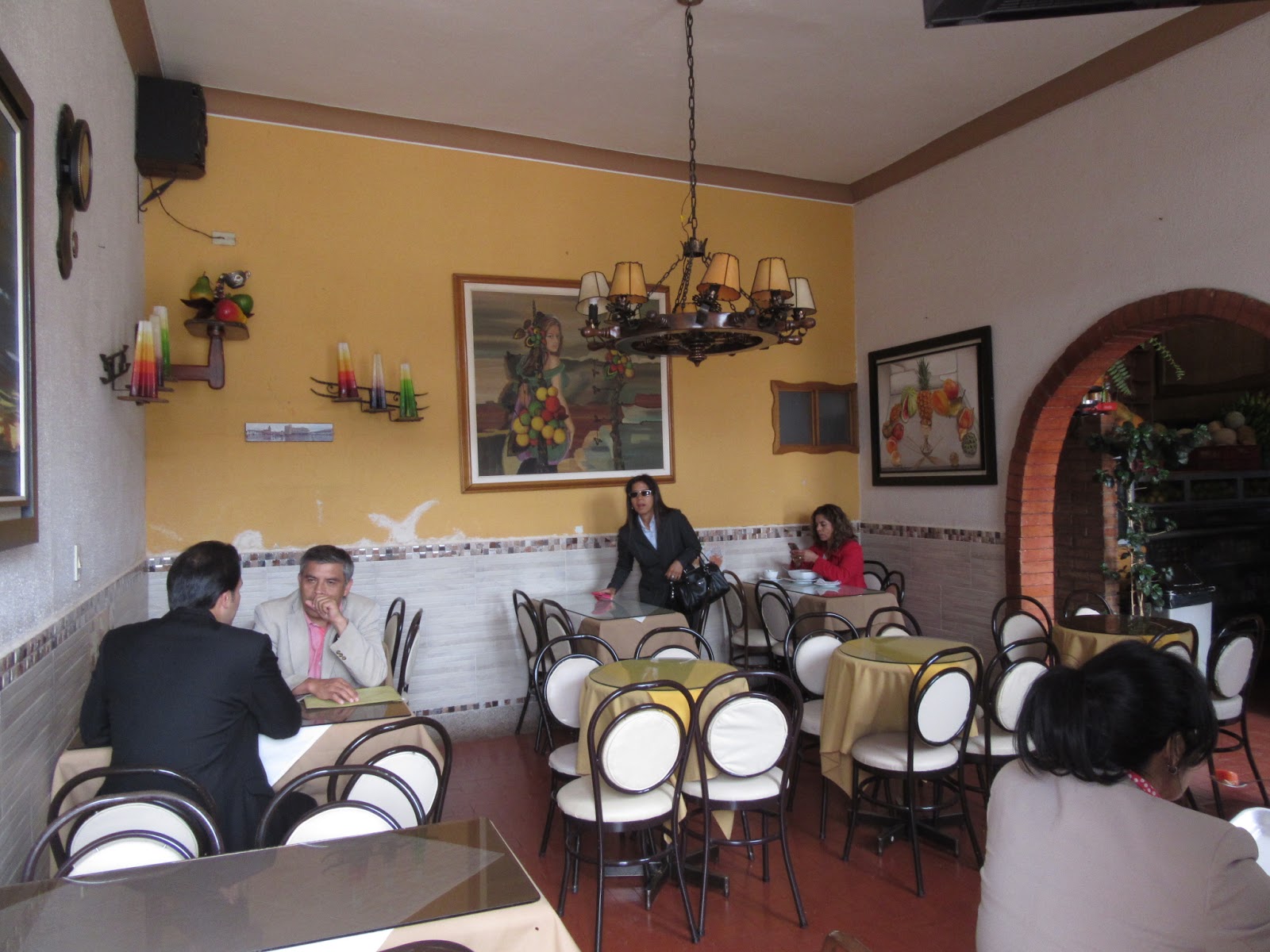
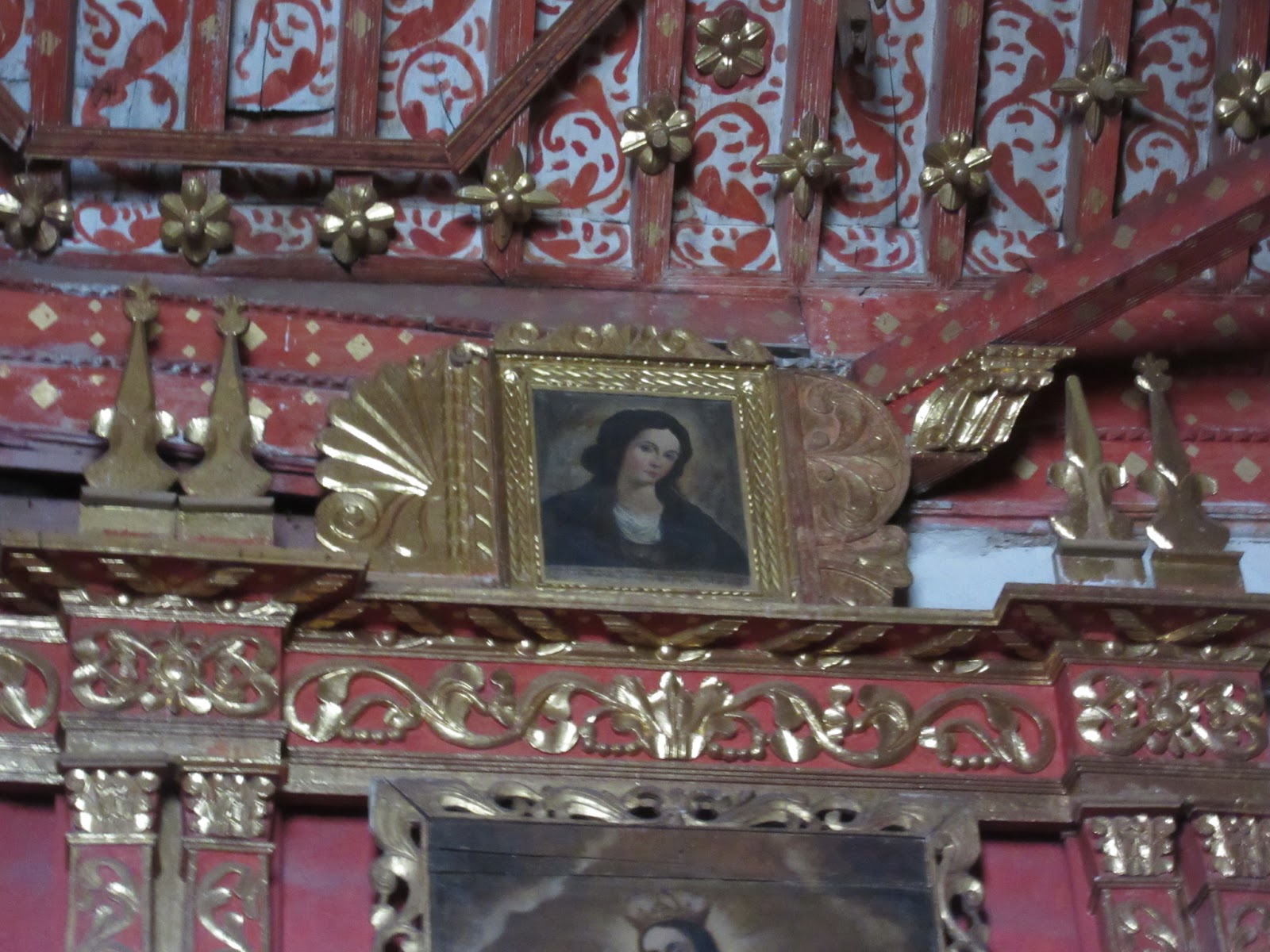
In the last post, I wrote about visiting or trying, at least, to visit several churches in Tunja, the capital of the Colombian state of Boyaca, as they were well known for their famous mudejar ceilings. The day had been mostly a loss except for our discovery of the fascinating St. Clara museum and chapel just before we took the bus back to Villa de Leyva.
At almost 5, we had the harebrained idea to jump off the bus at the turnoff for Pinturas y Petroglyfios before the town of Sachia. The bus driver had never heard of the 'paintings and petroglyphs' but we thought we’d give them a whirl hoping they weren’t too far from the highway even though it was late in the day to start such a trek especially since we didn’t know how far or where they were!


 Even if we didn't see any rock paintings, at least we could claim we'd spotted some goats!


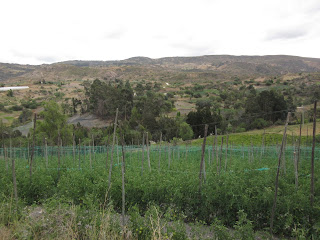


 Sorry some of these photos are blurry; normally I would have deleted them but they were the best I could take when we were trying to keep up the fast pace set by the people up front and I didn't have the time to stop and take photos but rather just 'point and shoot' while still walking!


 One of the men in particular was so friendly and effusive – we felt like old friends by the time we each went our separate ways!
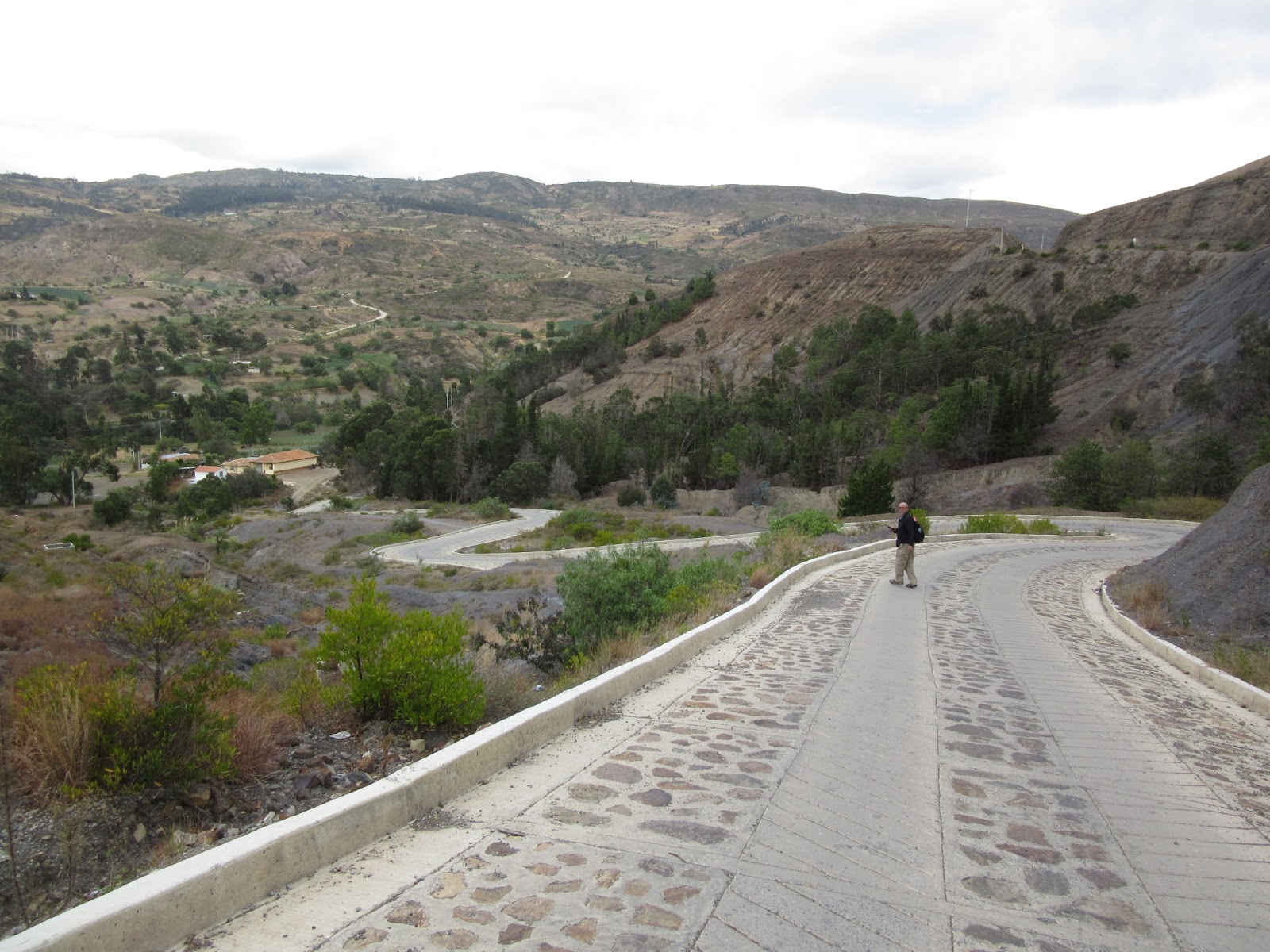
 The 'path' really fit the description of uphill and down dale!

 A board constituted the bridge across the stream.

 A view looking back where we'd hiked through the mountains. I remember just wondering here how much further we had to go and what sort of other terrain we might be facing ahead.

 Luckily, a short time later, we came across the pinturas or rock art. Before writing this post, I learned anthropologists and archaeologists define rock art as images carved, drawn, or painted onto immovable rock surfaces. Images that are carved or engraved into rock are called petroglyphs while images made with paint or other pigment are called pictographs. I still wasn't sure what the difference was between rock art and pictographs after reading that!
 We had no information about them so were left to speculate how long they might have been there, who and why had painted them and with what substances.

 It made me think what else is yet to be discovered in similarly remote locations around the world.


 I am not a good enough writer to adequately explain the sense of awe and amazement we both felt on discovering by ourselves the images as their location was anything but easy to find. I remember feeling a huge sense of relief that our admittedly crazy idea of hopping off the bus in the middle of a busy highway late in the day had resulted in our reaching our goal of viewing the pictographs.


 Because of the lateness of the hour and the setting sun, we didn’t dawdle too long as we wanted to safely retrace our steps through the fields and almost indistinguishable path to the spot on the highway where we’d been dropped off. I have a better sense of direction than Steven but even I wished that we'd thought to leave a trail of bread crumbs behind us like Hansel and Gretel!


 At one point, the winds picked up furiously and the temperature dropped several degrees in a matter of minutes.

 Steven wasn't too happy that I asked him to stop here so I could take his photo as he was concerned that one of the cows might decide to become aggressive. His fears, luckily, amounted to nothing and we passed without incident.
 Far more 'dangerous' in my mind was our both crossing this rickety foot bridge in one piece!


 We didn’t tell him, of course, that unfortunately we wouldn’t be eating them as we were taking an early bus to Bogota and then flying onto Quito tomorrow. I would have loved eating them in an omelet.

At almost 5, we had the harebrained idea to jump off the bus at the turnoff for Pinturas y Petroglyfios before the town of Sachia. The bus driver had never heard of the 'paintings and petroglyphs' but we thought we’d give them a whirl hoping they weren’t too far from the highway even though it was late in the day to start such a trek especially since we didn’t know how far or where they were!
The only information we had about the location of the rock
paintings was this: 'Around 10km down the road to Santa Sofía. The site is hard
to find on your own.' The directions weren't as explicit as we would have liked, needless to say!

Coming across the sign was reassuring, let me tell you!

Steven thought we’d be OK since maps.me had been reliable in
the past. We would sure put it to the test this time since we were pretty much well off the beaten track!


After walking for a bit, we came across three locals whom we
then followed for a good stretch through fields, across streams with very
rickety bridges, past cows and barking dogs and, to add insult to injury,
prickly cactus, too!


The locals turned off and then we were on our own still
hoping to find the rock paintings before darkness set in for the night.


On our hike back, we noticed in the distance the very friendly man who had helped us earlier. It looked like he was trying to round up a very unwilling cow in the pasture!


As we neared the road back up to the highway, a farmer saw
us and picked half a dozen tomatoes for us from his garden. What kindness and
generosity.


By the time we got back to the curve in the highway, it was
pitch black and we had no idea when a bus going to Villa de Leyva might appear
and, more importantly, whether he would see us and be able to stop in time. I
must admit to having some concerns at that point about the wisdom of our
unexpected adventure. A bus headed for ‘home’ did indeed pass us soon so we began
walking and hoping we wouldn’t have to make the trek all the way to Villa de
Leyva. Luckily, a top of the line tour bus kindly stopped about twenty minutes later
so we hopped in with much relief and appreciation as you can imagine! In almost no time,
we were back safe and sound in Villa de Leyva with another adventure under our
belt to share.
I can’t begin to describe how incredible a sight it was to
see the pinturas after a hike I don’t think we’ll ever forget! We always call our long
overseas trips ‘adventures’ rather than vacations and this adventure was one of
our favorite ones ever. Adding the element of danger from not knowing where the
rock paintings were AND starting out later than was probably prudent was even
more exciting, especially in retrospect! Our adventure was the perfect ending
to four fabulous days in colonial Villa de Leyva.
Next post: A mugging and walking tour of Quito, Ecuador.
Posted on October 7th, 2017, from Guayaquil, Ecuador.