After a four-hour bus ride northeast from Bogota, we arrived
in the lovely, colonial town of Villa de Leyva which was declared a national monument in 1954. The entire photogenic
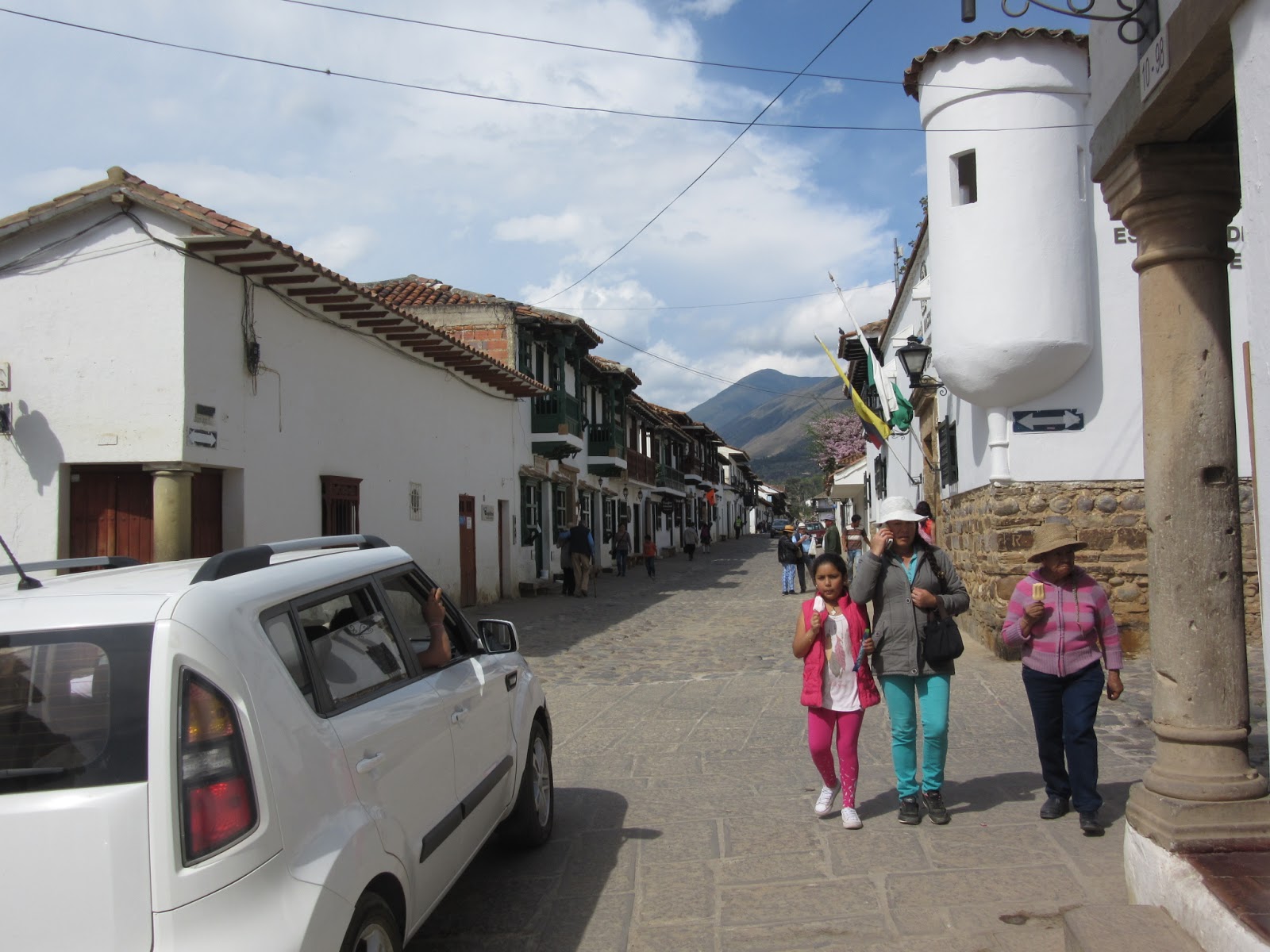
village has been preserved with cobblestones streets and whitewashed buildings
as if it were frozen in time. Declared a national monument in 1954, the
photogenic village was preserved in its entirety with cobblestone roads
and whitewashed buildings.


 The city's physical beauty and mild, dry climate have long attracted outsiders. The town was founded in 1572 by Hernán Suárez de Villalobos, who named it for his boss, Andrés Díaz Venero de Leyva, the first president of the New Kingdom of Granada. It was originally a retreat for military officers, clergy and nobility.
In recent years, an influx of wealthy visitors and expats has slowly transformed the once-hidden gem of Villa de Levy. Lonely Planet travel guide commented that boutique hotels, gourmet restaurants and tacky tourist shops have replaced many of the old family inns, cafes and the authenticity. The 2007 soap opera Zorro: La Espada y la Rosa was filmed here, bringing further publicity to the city. It was even the location for a famous film based on a Gabriel García Marquez book Crónica de una Muerte Anunciada (Chronicle of a Death Foretold).


 An inner courtyard was common, we learned, in colonial homes.


 The local Indian communities used to gather in the square to gaze at the heavens as the town has been a natural astronomical observatory since pre-Colombian times. It is now a magnet for stargazers with astronomy associations meeting to exchange knowledge, share experiences and learning about state-of-the-art technology in telescopes to study the cosmos.




 From the sublime to a sad commentary on our times: a sign that asked that people not put their combs in the holy water!


 The courtyard out back had an enormous replica vat and spoon used to make chocolate.


 Who could not fall in love with a town as charming as this?
 Just up the lane from the Chocolate Museum cum shop was the Royal Liquor Plant which was recognized as Colombia's first distillery. The popular Baroque-style doorway had the coat of arms that Spain used in all of its cities and colonies beginning in the 17th century.
 The distillery was now a now a music school. Jazz music must be very
popular in this area of the country as we kept hearing the music being played from
piano bars and restaurants as we strolled the beautiful, cobblestone streets.


 As I entered the courtyard, it was clear that the former church was now dedicated to nature exhibits instead. We learned that the former St. Augustine Convent was founded in 1594 by the personal physician to Spain's King Philip II. It was the first church in Villa de Leyva. In 1880, the community of the Dominican Sisters of St. Catalina de Sena, the first Colombian religious congregation, was founded. Of the original cloister's colonial construction, the white bow and the whitewashed facade contrasted with the blue windows and doors. The church was the home of the Biological Resources Research Institute.
 The former altar had been transformed


 We were lured to the immense garden before visiting the museum.

 I have always been drawn to grasses like these. Janina and Pat: I bet you know what they are and know whether we can buy some next spring from O'Toole's, right?


 We had been disappointed we hadn’t seen any decent quality handicrafts shops so far in Colombia and it sure hadn’t been for lack of trying either! Coming across one after another high-quality shop and gallery here in Villa de Leyva was therefore a very welcome surprise, especially to me as you probably suspected, Darlene!


 I really admired the necklaces but refrained from buying one as I didn't know when I would wear something like it at home.
 Lina: This shop had almost as pretty scarves as the Museo del Oro in Bogota.


 An Asian fusion wok restaurant with live music seemed totally out of place in colonial Villa de Leyva.
 Pizza Napolitano was far more our style for dinner that night!


The roads around our guesthouse were under a bit of construction so it made for some careful walking during our four-day stay.


In recent years, an influx of wealthy visitors and expats has slowly transformed the once-hidden gem of Villa de Levy. Lonely Planet travel guide commented that boutique hotels, gourmet restaurants and tacky tourist shops have replaced many of the old family inns, cafes and the authenticity. The 2007 soap opera Zorro: La Espada y la Rosa was filmed here, bringing further publicity to the city. It was even the location for a famous film based on a Gabriel García Marquez book Crónica de una Muerte Anunciada (Chronicle of a Death Foretold).

Kay: When I saw this aqua yarn in a shop, I thought of you as you were knitting with a similar color when I first met you in Loving Hands so many years ago now.

We made a short stop at the Casa Antonio Nariño, the home that was then transformed into a museum dedicated to a key Colombian historical figure who was a hero in the war for Colombia’s independence from Spain. Set in a beautiful house where he died, the museum gathered some samples of articles from the 19th century plus a few original items from Antonio Nariño himself.


The Colombian Constitution:


Gloria: Even we could understand some of the rights enjoyed by your fellow Colombians on the signs in the courtyard!

After admiring the peaceful backyard, we headed out as the museum seemed more directed toward local nationals as the role of Nariño wasn’t widely known outside Colombia. But as we had grown tired of only hearing about the conquests of 'the liberator', the museum made us aware there were other important historical figures in Colombia.

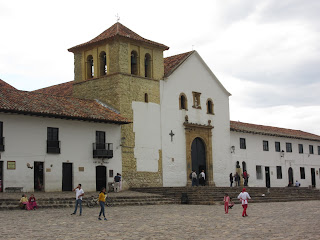
Villa de Leyva was known for its whitewashed colonial buildings, cobbled lanes and the town’s primary feature, the vast main square or Plaza Mayor, one of the largest town squares in the Americas. The impressive square was paved with massive cobblestones and ringed by an active cathedral and magnificent colonial buildings, some of which served as bars and restaurants.

The small fountain in the middle of the square provided water for the village inhabitants for almost 400 years. Also in the square was the House of the First Congress of the United Provinces, where new laws were drafted after independence in 1812. Unlike most Colombian cities where most main squares were named after historic heroes, especially Simon Bolivar, this one was traditionally called Plaza Mayor.


Even though we'd only been in the town for a few hours, the charms of Villa de Leyva had already held us firmly in its grasp.

We couldn't miss stopping in the Iglesia de Nuestra Senora del Rosario or Our Lady of the Rosary Church on the square. The church, built by the Dominican friars between 1608 and 1665, was famous for its balanced architecture, its Castilian tower and the remains of Don Antonio Nariño.


The various frescoes provided a very interesting insight into how the slaves were bludgeoned into Christianity much as they had also been in Bogota. The humble church with the mountains as a backdrop was a nice quiet place for reflection as to how the local people were treated during colonial times.


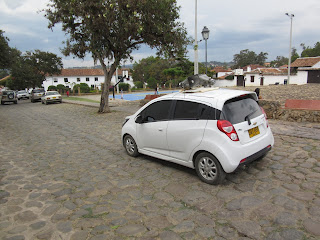
I had a tough time walking on the cobblestones and couldn’t imagine trying to push either a stroller or a wheelchair on the uneven streets. Steven and I joked that cars must need great shocks in the town to contend with driving in town!

Several cobblestone streets radiated out from the main square. I guess it must have been our expert noses that led us to the one where the Museo del Chocolate just happened to be!


Steven was invited to taste some chocolate beer but he
declined.


It wasn't as much of a museum as it was a chocolate shop and tearoom but it was enjoyable to walk through for a few minutes.


We happened upon another lovely little square


with another pretty church, or at least that’s what it looked like from the outside. But we all know appearances can be deceiving!

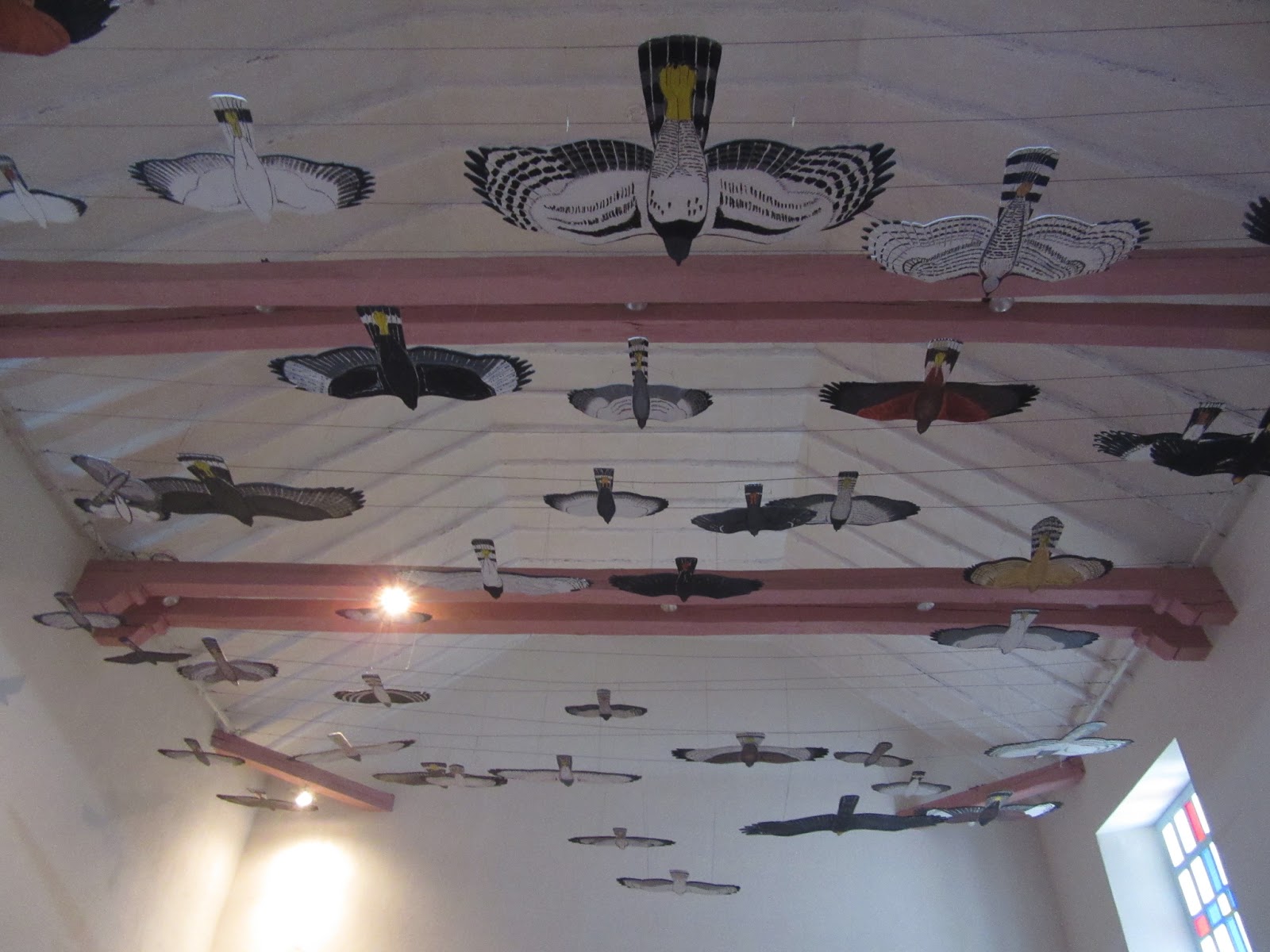

as was the space where the pews had been.


The former church had a huge garden out back which was yet another delightful surprise.


We stopped next at the Casa Museo de Antonio Ricaurte, the home of a Colombian military figure and hero of Colombian independence. The museum was located in the house where Ricaurte was born in 1786. The unassuming entryway opened into a lovely courtyard.


Most museums we've been to around the world hand out pretty tickets which make for great souvenirs. These were the largest by far of any we've seen!

Ricaurte was considered the hero of the battle for Battle of San Mateo in Venezuela; historians say he set fire to the gunpowder storeroom that he was inside when he found himself surrounded by enemy troops. I read somewhere that he blew himself up so Simon Bolivar, aka The Liberator, could save Venezuela. I much preferred that version of the story. Whatever version one believes, the event was quoted in one of the verses of the Colombian national anthem.


When the Colombian Air Force was created in 1919, they chose Ricaurte as their honorary representative because of his heroic actions in San Mateo.

Even for those not interested in Colombian military history, it was a nice example of one of the colonial-style homes. What made it stand out for both of us was the beautiful and well-maintained garden!

What a shame the peaceful and serene square was disturbed by a car
driving very slowly past and making announcements from loud speakers.


You would have felt right at home amid all the gorgeous woven and hand-knitted items!


These were cute but not a patch on the beautiful children's sweaters you make!


We were so glad we’d decided to come to Villa de Leyva as we
walked down one more exquisite street after another.

Almost every street in town had benches every block or so where people sat and chatted whiling away the day and perhaps resting after walking on the cobblestones!


Next post: Many more reasons to visit Villa de Leyva!
Posted on October 3rd, 2017, from Cuenca, Ecuador.


